TL;DR
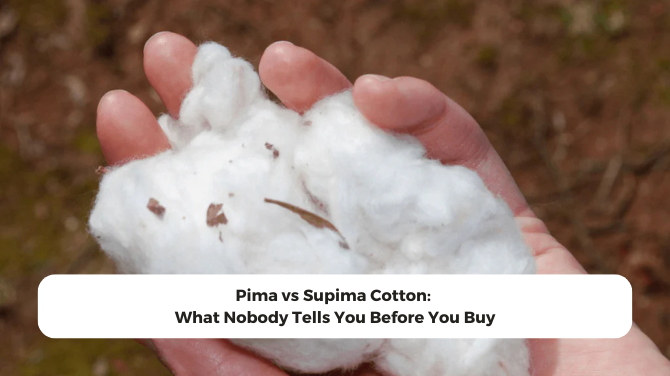
Pima and Supima cotton are both premium long staple cottons known for softness and durability. The key difference is that Supima is a certified brand of American grown Pima cotton with strict quality control. While both offer high quality, factors like sourcing, consistency, and fabric processing matter more than just the name when apparel brands make buying decisions.
If you’ve been sourcing fabrics or even just exploring premium cotton options, you’ve probably come across this comparison. Pima vs Supima cotton. At first, it sounds simple. Two types of cotton, both high quality, both used in premium garments. But once you start digging, things get a bit unclear.
Check out our digital swatch here
Many buyers assume Supima is always better. Some think they are completely different fibers. And others just go with whatever the supplier tells them. The reality is a bit more nuanced. And honestly, this is where many sourcing decisions go wrong.
What Is Pima Cotton
It’s cultivated in various places, such as: the United States Peru Australia Pima cotton fabrics, thanks to their longer fibers, usually provide: a smoother feel greater durability less pilling enhanced comfort But, a key point to remember is that not all Pima cotton is created equal. The quality can fluctuate based on its origin and the processing methods used. Buyers should focus on the fabric’s actual performance, not just the label.
Because the fibers are longer, Pima cotton usually feels smoother and holds up better over time. It also tends to pill less and feels more comfortable when worn. But here’s something people don’t always talk about. Not all Pima cotton performs the same. The quality can change quite a bit depending on where it’s grown and how the fabric is made. So for buyers, it’s not really about the label alone.
What Is Supima Cotton
Supima cotton is essentially a branded version of Pima cotton grown in the United States.
The key difference is certification.
Supima cotton is controlled by an organization that ensures:
- fiber quality standards
- traceability
- origin verification
Because of this, Supima cotton is often marketed as a more reliable option in terms of consistency. But here’s the part that many people don’t talk about. The fiber itself is still Pima cotton. The difference is in quality control and branding, not in the basic fiber structure.
Pima vs Supima Cotton: The Real Differences
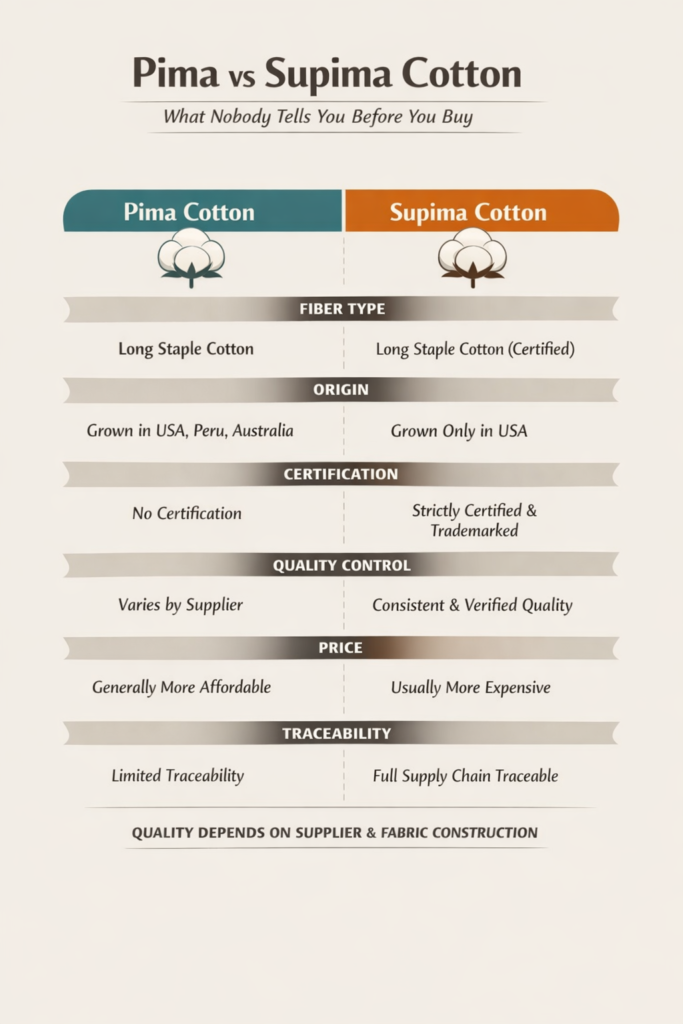
Fiber Quality Both types are made from extra long staple cotton, and both are known for their softness and strength. Consistency Pima’s quality can fluctuate, depending on where it comes from. Supima, on the other hand, is more consistent because of its certification.
Traceability It’s not always possible to trace the origin of Pima cotton. Supima, however, has a strict tracking system in place. Price Supima tends to be pricier. Pima, depending on the supplier, can sometimes offer better value. Ultimately, the distinction between Pima and Supima cotton boils down to supply chain control, rather than the fiber itself.
So when comparing pima vs supima cotton, the difference is less about fiber type and more about supply chain control.
Why Fabric Construction Still Matters More Than Fiber Name
Here’s something many buyers overlook.
Even the best cotton fiber can perform poorly if the fabric is not constructed properly.
Weaving, yarn quality, and finishing processes all influence the final fabric.
For example:
- poor weaving can reduce durability
- incorrect finishing can affect softness
- uneven dyeing can impact appearance
If you want to understand how fabric structure plays a role, our article on woven fabrics
How Pima and Supima Cotton Are Used in Apparel
Both fabrics are widely used in premium garments.
Common applications include:
- high end shirts
- luxury t-shirts
- bedding
- premium casualwear
For shirt manufacturing specifically, fabric structure and weight also play a role.
You can explore more in our article on cotton fabric for shirts, which explains how different cotton fabrics are used across shirt categories.
The Role of Sampling Before Bulk Production
One of the biggest mistakes buyers make is skipping proper sampling. Even when using premium cotton like Pima or Supima, sampling is critical.
During sampling, buyers should check:
- fabric hand feel
- shrinkage
- color consistency
- overall finish
This step helps avoid surprises during bulk production. We’ve covered this in detail in our article on woven sample and why it plays a key role in fabric sourcing.
Dyeing and Finishing Considerations
Both Pima and Supima cotton respond well to dyeing, but the process still needs to be controlled.
Incorrect dye selection can lead to:
- fading
- uneven color
- reduced fabric quality
Choosing the right dye based on fiber composition is important.
Our article on criteria for selecting dyes by fibre content’ explains how dyeing affects final fabric performance.
Production Planning and Consistency
Consistency is one of the biggest challenges in fabric sourcing. Even when using premium cotton, issues can appear if production is not well managed.
Some common concerns include:
- variation between batches
- inconsistent finishing
- delivery delays
Proper planning helps reduce these risks. You can read more about this in our article on master production scheduling in the apparel industry.
Why Buyers Should Focus on the Supplier, Not Just the Fiber
This is probably the most important part. When comparing pima vs supima cotton, many buyers focus only on the fiber name. But in reality, the supplier plays a bigger role in final fabric quality.
A reliable exporter ensures:
- consistent fabric performance
- accurate sampling
- controlled dyeing and finishing
- stable production timelines
At Dinesh Exports, the focus is on managing the full process from yarn to finished fabric, which helps maintain consistency across bulk orders.
Where Seersucker and Specialty Cotton Fabrics Fit In
Interestingly, premium cotton fibers like Pima and Supima are also used in specialty fabrics.
For example, textured summer fabrics can also benefit from high quality cotton fibers.
You can explore one such example in our article on seersucker fabric and how it performs in warm climates.
Watch the Supima story here: The Supima Story
Final Thoughts
The comparison between Pima vs Supima cotton is often misunderstood. Both are high quality cotton fibers, and both can produce excellent fabrics when processed correctly. The real difference lies in consistency, certification, and sourcing.
For apparel brands, focusing only on fiber type is not enough. Fabric construction, dyeing, finishing, and supplier reliability all play a bigger role in the final product. When these factors are managed properly, both Pima and Supima cotton can deliver premium quality fabrics for global apparel markets. If you are looking for sustainable cotton fabrics in wovens, please contact us.
Frequently Asked Questions
Is Supima cotton better than Pima cotton?
Not necessarily. Supima offers better consistency due to certification, but high quality Pima cotton can perform just as well depending on sourcing.
What makes Pima cotton special?
Pima cotton has extra long fibers, which make fabrics softer, stronger, and more durable compared to regular cotton.
Why is Supima cotton more expensive?
Supima cotton is certified and traceable, which adds to its cost and perceived reliability.
Can Pima cotton be used for shirts?
Yes, Pima cotton is widely used in premium shirts because of its softness and durability.
Does Supima cotton shrink?
Like most cotton fabrics, it can shrink slightly if not properly finished.